
























Gaza Ceasefire and Pakistan Talks: Why Iran Plays by Different Rules”On the geopolitical chessboard of the Middle East,

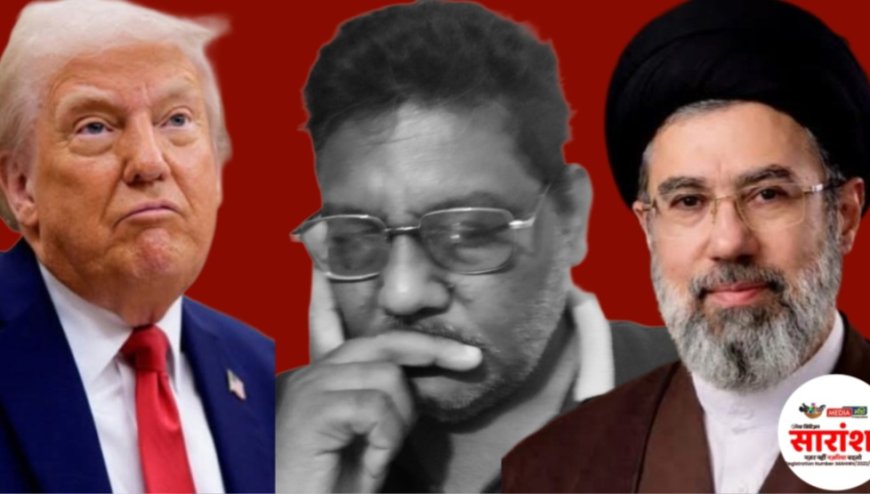
(Ali Raza Abedi) Iran has once again been pushed into the dock by its critics—but the latest round of accusations says as much about the accusers as it does about Tehran’s strategy. In Pakistan, two rounds of talks between Iran and the United States over ceasefire frameworks and regional tensions ended without breakthrough. In the third round, the Iranian delegation reportedly handed over a set of conditions and exited without engaging in direct talks with the American side. Seizing on this, Iran’s detractors have raised a pointed question: why was there no mention of Gaza or a ceasefire condition tied to it? Is this not evidence of a “double standard”?
The question is sharp—but incomplete. A ceasefire between Hamas and Israel in Gaza is already in place. Repeating the same demand at every negotiating table is not necessarily diplomacy; it often becomes political noise. Iran’s position on Gaza has been articulated before, and once a ceasefire exists on the ground, the agenda in Pakistan was bound to move toward broader regional equations.
At its core, these talks were never solely about Gaza. They orbit around sanctions pressure, deterrence balances, and the reshaping of regional power lines. Folding every issue into a single set of conditions would undercut negotiation strategy. Diplomacy, by design, separates theaters and sequences priorities; Tehran’s decision to keep Gaza off that particular table reflects that calculus.
Critics argue that if Iran champions a “resistance” narrative, it should foreground Gaza in every forum. Yet the same voices often fault Tehran for over-ideologizing negotiations. Which is it—must every channel be subsumed under one issue, or should each forum carry its own mandate? The contradiction in the criticism is hard to miss.
Iran’s posture on Lebanon underscores the same pragmatism. With Hezbollah as a central pillar of its regional architecture, Tehran has a direct stake in preventing escalation there. Supporting a ceasefire in Lebanon is less about optics and more about preserving deterrence and limiting spillover. In Gaza, by contrast, Iran has preferred indirect leverage over formal seat-at-the-table responsibility. Different arenas, different stakes, different moves.
The reality is that international politics runs on priorities, not slogans. With a ceasefire already holding in Gaza, the Pakistan track aimed at a wider regional balance. Judging every negotiation against a single litmus test distorts both context and intent.
What we are witnessing is not inconsistency but calibration. Tehran keeps distance where direct exposure raises costs, and presses for stability where its core interests are on the line. Calling this a double game may be rhetorically convenient; understanding it requires acknowledging how statecraft actually works.
What's Your Reaction?













![10 महोर्म आशुरा जुलुस औरंगाबाद [छ. संभाजीनगर]](https://citizensaransh.com/uploads/images/202407/image_140x98_669795efe1616.jpg)