












A Photograph Is Not a Story Claims of ‘Touching Feet’ Over Pezeshkian’s Gesture Raise Questions About Media Credibility

[ ALI RAZA ABEDI ] A section of the Indian media is once again facing questions over the practice of drawing sweeping conclusions from a single photograph or a few seconds of video.
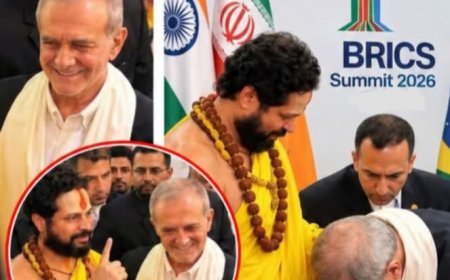
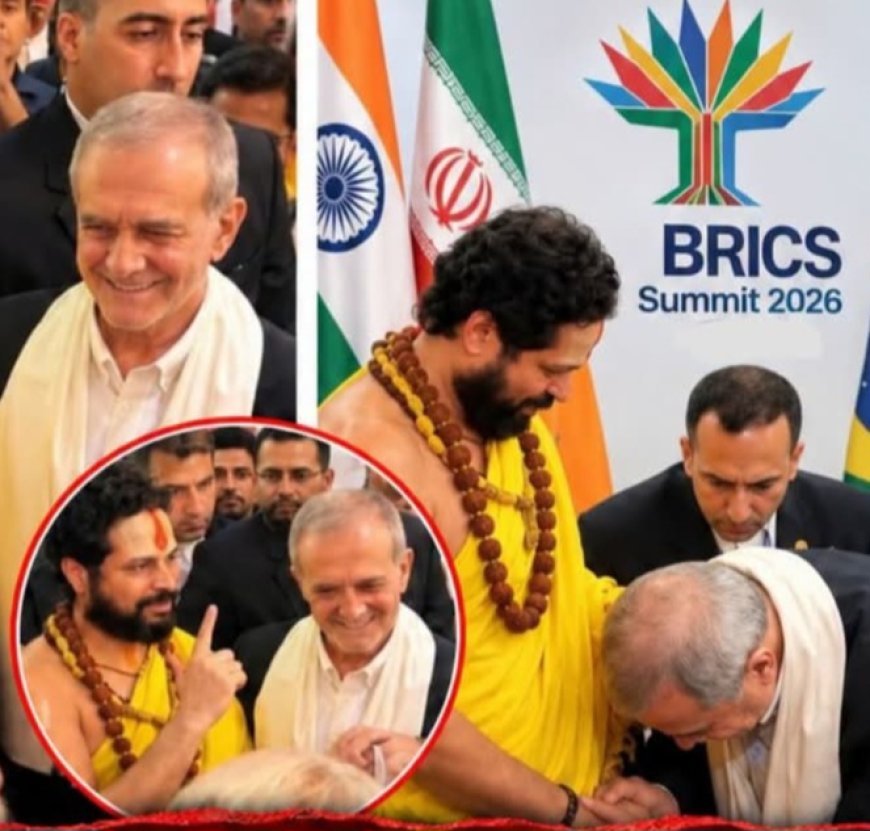
During the BRICS Summit, photographs and video footage of Iranian President Masoud Pezeshkian meeting a Hindu religious leader went viral on social media. In the footage, Pezeshkian can be seen bending down in front of the religious leader. Soon afterward, some television channels, newspapers and social media posts claimed that the Iranian president had touched the religious leader’s feet.
But do the available photographs and the short viral clip conclusively establish that?
Another interpretation of the video has also emerged: Pezeshkian may have bent down to pick up an object that had fallen to the ground. In such circumstances, concluding solely from a photograph or a few seconds of footage that the Iranian president bowed out of religious reverence or touched the leader’s feet cannot be treated as an established fact without further verification.
The Camera Was There — So Why Was the Conclusion Reached Before the Facts?
In today’s digital age, public events are often recorded from multiple angles. When cameras are documenting an entire event, journalism should not be about selecting a single frame to create a sensational narrative. Its responsibility is to examine the complete context before drawing conclusions.
Yet a familiar pattern can sometimes be seen in sections of the media: a small visual moment is turned into a much larger story before the circumstances surrounding it are properly established.
The more serious concern is when an international diplomatic event is presented through a religious or communal lens. Personal faith may belong to an individual, but the fundamental duty of journalism is to facts and truth.
What is visible in the available footage is that Pezeshkian bent down in front of the religious leader. What remains unproven is the specific claim that he touched the leader’s feet as an act of religious respect.
That distinction matters.
Unless the complete video, a clear account of the incident, or an official statement from the Iranian president or the Iranian government establishes the exact nature of the gesture, the claim should be presented as an allegation or interpretation—not as a confirmed fact.
Publishing definitive claims on the basis of an incomplete video clip or a single photograph risks turning journalism into misleading publicity rather than factual reporting.
The purpose of journalism is not to provoke emotions, but to provide verified information. If an incident happened exactly as claimed, it should be possible to establish that through evidence rather than sensationalism.
Every act of bending down is not necessarily a touching of feet—and every photograph does not tell the whole story.
What's Your Reaction?











![10 महोर्म आशुरा जुलुस औरंगाबाद [छ. संभाजीनगर]](https://citizensaransh.com/uploads/images/202407/image_140x98_669795efe1616.jpg)